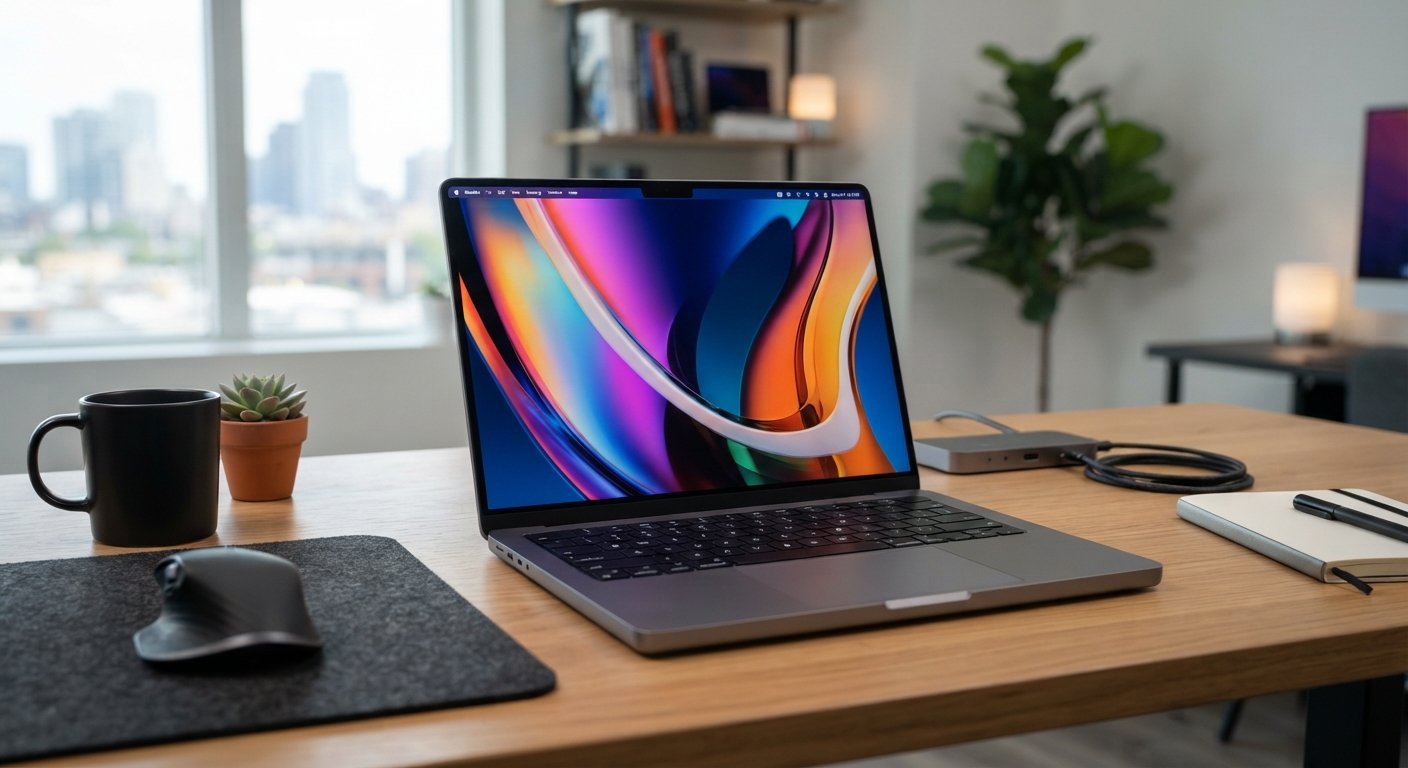

Introduction to the M6 Chip
Apple's latest event unveiled the new iMac and entry-level MacBook Pro, both equipped with the cutting-edge M6 chip. This update marks a significant leap in performance and efficiency, catering to professionals and tech enthusiasts alike.
Performance Enhancements
The M6 chip offers up to 40% faster CPU performance and double the graphics capability compared to its predecessor, the M4. This is particularly beneficial for developers and IT professionals who require robust processing power for complex tasks.
Technical Specifications
| Device | CPU Cores | GPU Cores | Max RAM | Max Storage |
|---|---|---|---|---|
| iMac (2 Thunderbolt Ports) | 10 | 10 | 24GB | 1TB |
| iMac (4 Thunderbolt Ports) | 12 | 12 | 32GB | 2TB |
| MacBook Pro | 12 | 12 | 32GB | 4TB |
Implications for IT Professionals
The enhanced performance of the M6 chip is poised to transform workflows, especially in data-intensive environments. For instance, the improved Neural Engine capabilities are ideal for machine learning applications, offering nearly five times faster on-device AI processing.
Comparative Analysis
Compared to the previous M5 chip, the M6 provides a 30% increase in graphics performance. This makes the new MacBook Pro a compelling choice for graphics designers and video editors.
For more insights, explore our detailed review of the Apple 14-inch MacBook Pro with M6.
Questions fréquentes (FAQ)
What are the main benefits of the M6 chip?
The M6 chip offers significant improvements in CPU and GPU performance, making it ideal for demanding applications.
How does the new iMac differ from the previous model?
The new iMac features the M6 chip, offering up to double the SSD read/write performance compared to the M4 model.
Équipe Éditoriale TECHRER
L’équipe éditoriale de TECHRER analyse chaque semaine les innovations technologiques, l’intelligence artificielle, la cybersécurité et teste les meilleurs outils numériques pour accompagner particuliers et professionnels.